
Eliminating the problem of "things coming to a halt without that person" — Achieving de-personalization with ERP
This article explains the risks of concentrating work on specific individuals and provides concrete measures for transforming that work into organizational knowledge using ERP systems. It aims to reduce handover costs and improve the visibility of business processes.
Are there any situations in your company where operations would come to a halt if a specific person took a vacation or suddenly quit?
This is a sign that work is becoming increasingly dependent on the skills and knowledge of a particular individual. While this may appear fine on the surface, it actually poses a significant risk that will slowly erode your company.
This time, I'll talk about the dangerous signs that indicate a company "can't function without that one person," and specific ways to escape that situation.
Why is "personalization" dangerous?
"Over-reliance on specific individuals" is not merely a matter of work stagnation. In fact, it can hinder the growth of the entire company and ultimately jeopardize the very continuity of the business.
-
Deterioration of operational efficiency: Because there are business processes that only specific individuals know, new employees cannot immediately become productive. The handover process is time-consuming, leading to exhaustion for both the trainer and the trainee.
-
Variation in quality: Because different people have different ways of doing things, the quality of the services and products provided is inconsistent. Even if a specific person makes a mistake, there is no system in place to check for it, increasing the risk of customer complaints.
-
Decreased motivation and employee turnover: Certain individuals with a concentrated workload are constantly under pressure and may experience burnout. Meanwhile, other employees may feel they are not being taught or that their work is not their responsibility, leading to a loss of motivation.
-
Loss of technology and know-how: The most frightening scenario is when that person leaves the company. Valuable know-how and customer information, cultivated over many years, are lost along with that person. This is tantamount to losing the company's assets themselves.
The first step to breaking free from "personalization"
So, what can we do to get out of this dangerous situation?
Many companies begin by creating operational manuals. Of course, that's a good start. However, constantly updating manuals to reflect the ever-changing nature of daily operations is an extremely time-consuming task. As a result, manuals often become outdated and revert to their original state.
Therefore, the fundamental solution is "standardization of business processes".
The biggest cause of reliance on individual expertise is that information is tied to specific individuals. By centralizing this information in a company-wide system, rather than keeping it in individuals' heads or numerous Excel files, anyone can perform their work with the same level of quality.
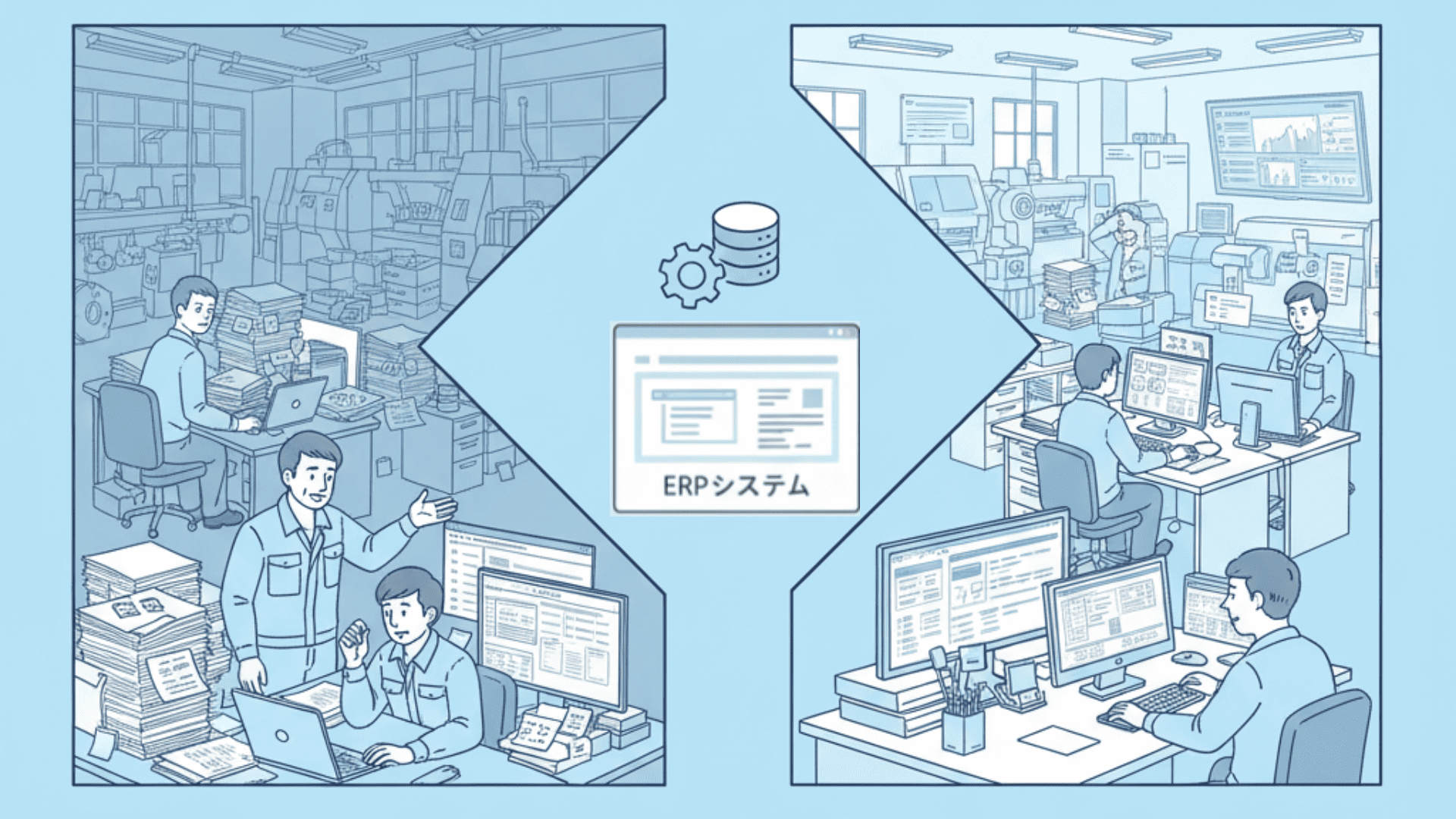
Achieving "Business Process Standardization" with ERPNext
The optimal tool for achieving this "standardization of operations" is ERP (Enterprise Resource Planning).
ERPNext can fundamentally solve the problem of reliance on individual employees by building a foundation for visualizing and sharing business processes.
-
All information is centrally managed: From sales information to inventory, finances, and project progress, all business data can be managed in a single system. This allows anyone to instantly access the latest information, regardless of who is in charge.
-
Automation and standardization of business processes: ERPNext has features that automate specific business processes and standardize approval flows. This allows you to perform tasks using the same procedures every time, without relying on individual experience or intuition.
-
Easy information sharing and business know-how sharing: Notes and know-how related to work can be stored within the system rather than by individual employees. Even when a new person joins the company, they can quickly grasp the overall picture of the work and find the necessary information by looking at the system.
-
Easy for anyone to use: ERP systems may have a reputation for being complex and difficult to use. However, ERPNext prioritizes intuitive operation, making it easy to use even for those unfamiliar with IT.
Eliminating jobs that "only that person can do" and creating an environment where anyone can work with peace of mind is an important step in increasing employee retention and improving company productivity.
Now is the time to consider implementing ERPNext to protect your company from the risks of over-reliance on individual employees and achieve sustainable growth.