
ERPNext vs Odoo Comparison [2026]: Differences, Cost, and Manufacturing Fit of Free ERP
Compare ERPNext and Odoo on cost, licensing, Japanese localization, manufacturing features, and customizability. We break down Odoo Community/Enterprise vs ERPNext.JP for SMB ERP selection.
The difference in a nutshell — which fits you?
Bottom line (the fit in 10 seconds)
- ERPNext.JP fits if: you have many users (you want to give accounts to part-timers and partner companies too); you are in manufacturing and need Japanese-style cost accounting and traceability; you want to fix running costs with a flat monthly fee.
- Odoo can fit if: you want to build your e-commerce and website inside the ERP; you want to start small as a SaaS with a small team (up to ~10 people).
Both are excellent open-source ERPs. The deciding factors are "how your user count grows" and "how much Japanese manufacturing practice you need out of the box."
→ Ask which one fits your company, ERPNext or Odoo
Are there really any "free ERP systems" available?
When you start looking for an ERP system, the first two that come up in a Google search are ERPNext and Odoo. Both are advertised as "open source" and "free," making them seem attractive compared to the tens of millions of yen required to implement major ERP systems.
but--
The "free" features offered by ERPNext and Odoo are completely different.
- Odoo's "free" feature actually only applies to one app. Adding a second app instantly requires a paid plan.
- ERPNext's "free" aspect means all modules are license-free. It's fully open under the GPLv3 license.
This article will provide a comprehensive comparison of both systems to help those in charge of selecting an ERP system determine which one is ultimately right for our company?
ERPNext and Odoo — Basic Profile
First, let's understand the basic differences between the two.
| Item | ERPNext | Odoo |
|---|---|---|
| Developers | Frappe Technologies (India) | Odoo SA (Belgium) |
| First Release | 2008 | 2005 (formerly known as OpenERP) |
| License | GPLv3 (Fully Open Source) | Community Edition: LGPL / Enterprise Edition: Proprietary |
| Implementation Record | Over 30,000 companies worldwide | Over 12,000,000 users worldwide (official) |
| Development Languages | Python + JavaScript (Frappe Framework) | Python + JavaScript (Odoo Framework) |
| Supported Languages | Over 70 languages | Over 60 languages |
While they may appear similar at first glance, there are crucial differences in their licensing models and cost structures. Let's delve deeper into this.
❶ Licenses and Fees — Which is "Truly Free"?
🔓 ERPNext: All modules are GPLv3
ERPNext is fully open source under the GPLv3 license. Accounting, sales, purchasing, inventory, manufacturing, CRM, HR—all modules are available for free.
- License fee: 0 yen (permanently free)
- User limit: None
- Feature limitations: None (all features available)
With ERPNext.JP the full source code is handed over, so you own it as your company's asset (a launchpad for AI-driven in-house development). If you'd rather have us handle server setup and operations, an optional managed cloud plan includes everything from hosting and maintenance to updates (contact us for pricing).
🔒 Odoo: Beware of the "free" trap
The free version of Odoo (Community Edition) is indeed available free of charge. However, many of the features necessary for practical use are only included in the Enterprise version (paid).
| Features | Odoo Community (Free) | Odoo Enterprise (Paid) |
|---|---|---|
| Accounting | ✅ Basic functions only | ✅ Fully functional |
| Manufacturing (MRP) | ⚠️ Basic only | ✅ Fully functional |
| Quality Control | ❌ None | ✅ Yes |
| Studio (No-Code Development) | ❌ None | ✅ Available |
| IoT Integration | ❌ None | ✅ Yes |
| Multi-site inventory (higher-level routing) | ❌ None | ✅ Available |
| Official Support | ❌ None | ✅ Available |
Furthermore, the pricing for Odoo Enterprise is user price × number of users.
Odoo Enterprise pricing estimates: Standard plan: Approximately $24.90/user/month ~ Custom Plan: Approximately $37.40/user/month ~ *For 50 users, the monthly cost will be approximately 180,000 to 270,000 yen or more.
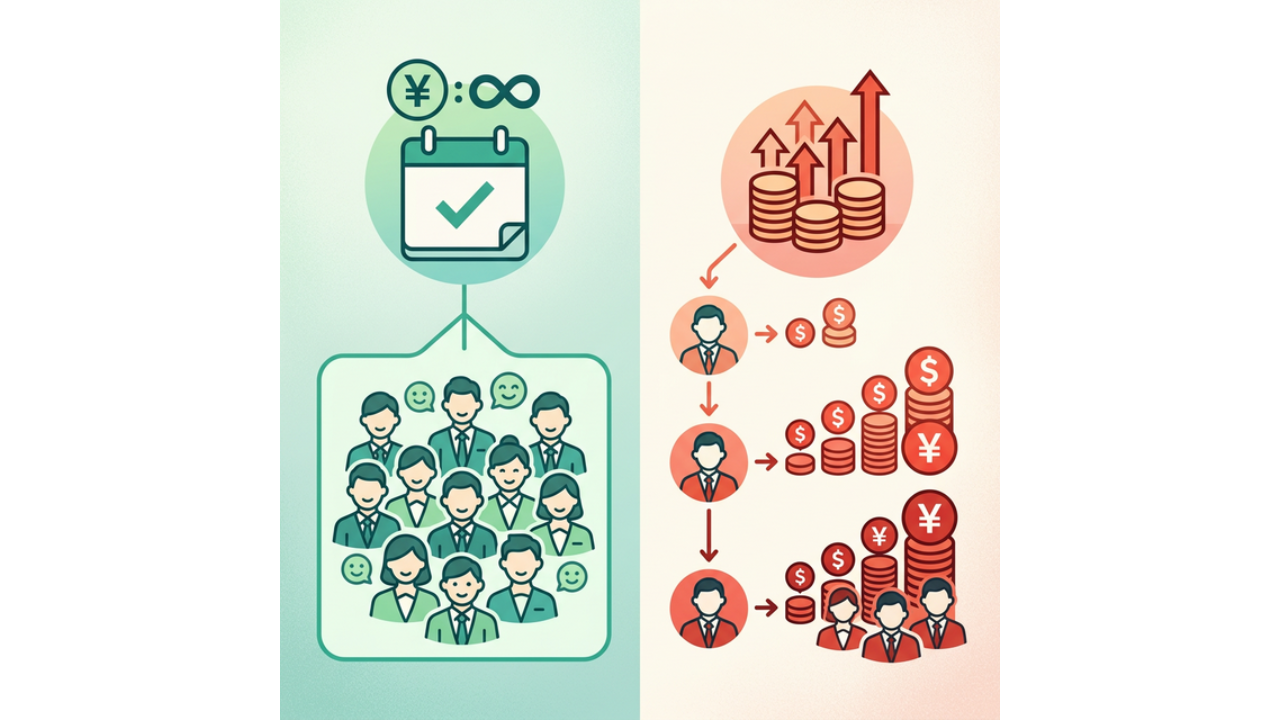
On the other hand, once you own the ERPNext.JP source, there is no per-user billing at all. And even on the optional managed cloud plan, the monthly fee stays flat whether you have 50 or 100 users. The cost difference with Odoo widens as the number of users increases. Contact us for pricing.
❷ Functional Comparison — From the Perspective of Manufacturing Companies and Small and Medium-Sized Enterprises
When selecting an ERP system, the important thing is not whether it has many features, but whether it has the features that suit your company's operations. Here, we compare the functions that are particularly important in small and medium-sized manufacturing companies in Japan.
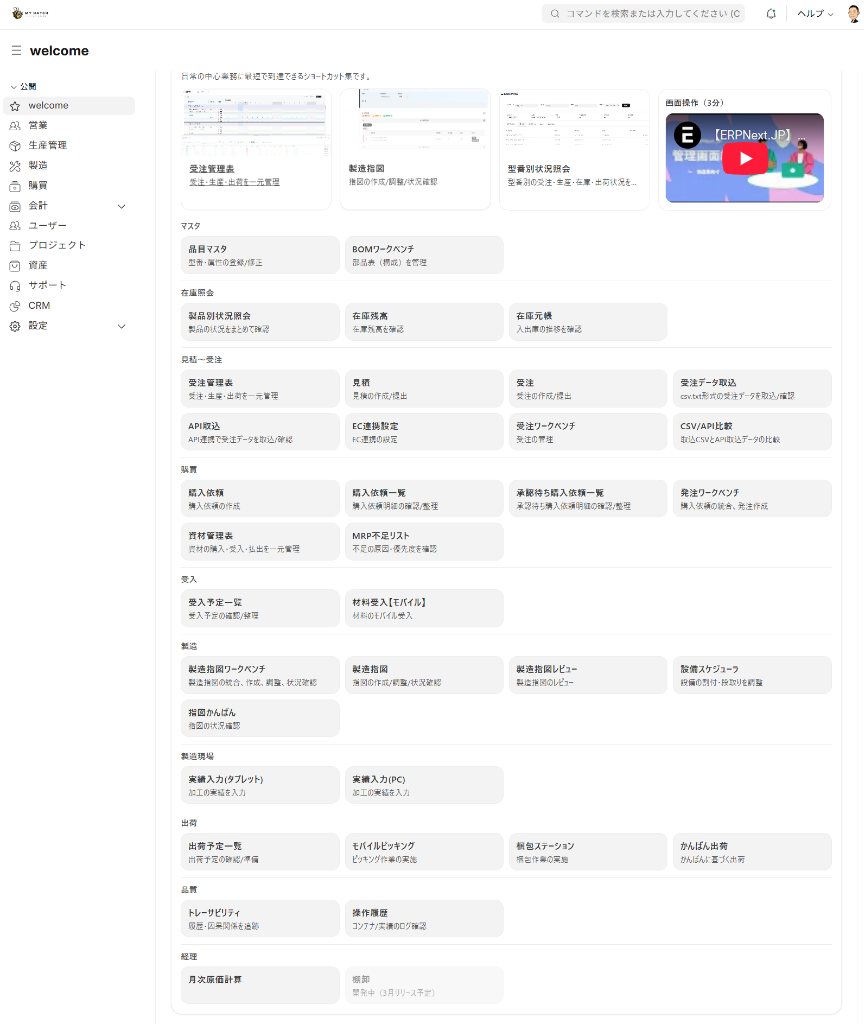
Order and Sales Management
| Features | ERPNext | Odoo |
|---|---|---|
| Quote → Order → Shipment → Invoice in one seamless process | ✅ Standard | ✅ Standard |
| FAX-OCR Order Import | ✅ Supported (ERPNext.JP) | ❌ Not available as standard |
| EDI Import (CSV/Excel) | ✅ Flexible Mapping | ⚠️ Custom Development Required |
| E-commerce mall integration | ✅ API integration | ✅ Connectors available |
Inventory and Warehouse Management
| Features | ERPNext | Odoo |
|---|---|---|
| Lot/Serial Number Management | ✅ Standard | ✅ Standard |
| Expiration Date Management | ✅ Standard | ✅ Standard |
| Barcode Scan Inbound/Outbound | ✅ Standard | ⚠️ Enterprise Edition Only (Barcode App) |
| Multi-site warehouse management | ✅ Standard | ✅ Standard |
Manufacturing control
| Features | ERPNext | Odoo |
|---|---|---|
| Multi-level BOM (Bill of Materials) | ✅ Up to 5 levels | ✅ Supported |
| MRP (Material Requirements Planning) | ✅ Standard | ⚠️ Enterprise version offers advanced features |
| Monthly cost accounting (rolling method) | ✅ Supports Japanese cost accounting (ERPNext.JP) | ❌ Standard cost method only |
| Equipment Scheduler | ✅ Gantt Chart Support | ⚠️ Enterprise Edition Only |
Accounting - Japanese Language Support
| Features | ERPNext | Odoo |
|---|---|---|
| Supports 10%/8% reduced consumption tax | ✅ ERPNext.JP standard | ⚠️ Localization required |
| Invoice System Compliant | ✅ ERPNext.JP Standard | ⚠️ Localization Required |
| All-Japan Banking Corporation CSV format deposit reconciliation | ✅ ERPNext.JP standard | ❌ Custom development required |
| Japanese UI | ✅ Fully Japanese-language supported | ⚠️ Some parts are not yet translated |
💡 Key Point: ERPNext's strength lies not in "adding missing features," but in "already including features tailored to Japanese business practices." While Odoo is highly versatile, adapting it to the Japanese market often requires in-house development.
❸ Customizability — Which is easier to expand?
ERPNext: The seamless integration of the Frappe Framework
ERPNext is built on top of the Frappe Framework. Its features include a standardized customization method and a low learning curve.
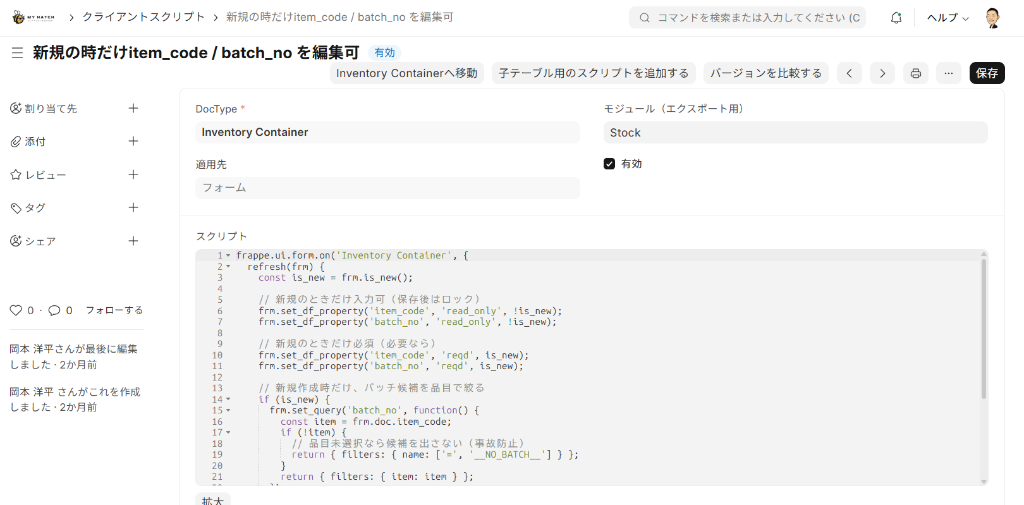
- Custom Fields — Add fields with just a few clicks from the screen.
- Client-side scripting — Dynamic screen control using JavaScript
- Server Script — Add business logic using Python
- Custom Apps — Create your own apps to extend the device without affecting its functionality.
Because everything runs on the same framework, it has a structure that is less likely to interfere with each other's customizations and is robust to upgrades.
Odoo: Abundant modules, but also complex.
The Odoo ecosystem has over 40,000 modules (Odoo Apps Store). While there are an overwhelming number of options, there are also some points to be aware of.
- There is variation in quality of third-party modules.
- Dependencies between modules tend to become complex.
- Without "Studio," which is exclusive to the Enterprise edition, no-code customization is difficult.
- There is a high risk of compatibility issues occurring during version upgrades.
🔧 When it comes to customization, the ability to maintain it stably is more important than the ability to do. If you're looking at long-term operation, the consistency of the framework is a point you can't overlook.
❹ Ease of Implementation — A Reality for Small and Medium-Sized Enterprises
ERPNext: A Simple Architecture
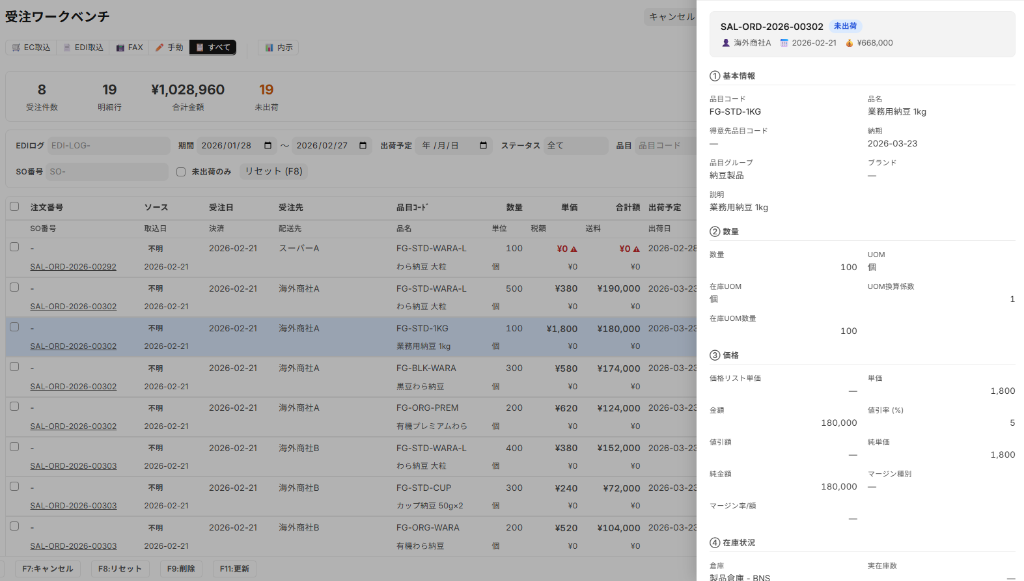
ERPNext is all integrated on a single framework (Frappe). Its installation, setup, and operation are simple, making it easy to use even for small and medium-sized businesses that don't have a dedicated IT specialist.
- Initial setup using the setup wizard
- With an Excel-like interface, on-site staff can start using it without any difficulty.
- Japanese documentation and support system (ERPNext.JP)
Odoo: Complexity due to its high functionality
While Odoo is packed with features, initial setup can be quite time-consuming.
- Design to select and install each necessary module one by one.
- You need to verify the consistency between modules yourself.
- They have more partners for the Japanese market than ERPNext, but their fees are also higher.
❺ Community and Support System
| Item | ERPNext | Odoo |
|---|---|---|
| Global Community | Active (GitHub / Discuss) | Very Active (One of the world's largest) |
| Japanese Community | Growing | Small |
| Support for Japan | ERPNext.JP (MyHaTch) provides ongoing support from implementation to operation | Multiple Odoo partners exist |
| Source Code Transparency | ✅ All code is publicly available | ⚠️ Enterprise version is not publicly available |
| Version Upgrade | Free (Community-driven) | Community Edition is free / Enterprise Edition is paid |
❻ Overall Comparison — Selection Chart at a Glance
| Evaluation Criteria | ERPNext | Odoo |
|---|---|---|
| 💰 Initial Cost | ◎ Low | △ Enterprise version is expensive |
| 💰 Running Costs | ◎ Unlimited Users | △ User-Based Subscription |
| 🏭 Features for the Manufacturing Industry | ◎ Comprehensive features tailored to the Japanese market | ○ Comprehensive features available in the Enterprise version |
| 🇯🇵 Supports the Japanese Market | ◎ ERPNext.JP already supports it | △ Localization is required |
| 🔧 Customizability | ○ Unified and stable | ◎ Overwhelming number of modules |
| 📖 Learning Cost | ◎ Low | ○ Slightly High |
| 🔓 Open Source Purity | ◎ All functions are OSS | △ Two-tier structure (CE / EE) |
❼ Voices from actual users — "In the end, we decided on ERPNext.JP."

We've looked at a comparison of the specifications so far, but what did people who actually got to try both and compare them think? Here are some testimonials from customers who considered Odoo and ERPNext in parallel before implementing ERPNext.JP.
"At first, I was drawn to Odoo. It looks nice, and it has a large number of apps. But as I used it more, I hit the 'free limitation'."
Functional experience: A three-tiered power dynamic
After actually operating both demo environments, this is the power dynamic the customer perceived.
| Comparison | Evaluation | Comments |
|---|---|---|
| ERPNext (official) vs Odoo Community (free) | ERPNext wins | "The free version of Odoo has too many limitations and is frankly unusable in practical applications." |
| ERPNext (original) vs Odoo Enterprise (paid) | Odoo Enterprise wins | "The paid version is certainly more feature-rich. However, the user subscription fee will increase costs." |
| ERPNext.JP vs Odoo Enterprise (paid) | ERPNext.JP wins | "It came with features tailored to Japanese business operations from the start, and was superior in terms of ease of use and customization." |
"Odoo Enterprise is certainly feature-rich. However, ERPNext.JP already has the necessary functions for Japanese workplaces built in, eliminating the need for extra settings or customizations. Overall, ERPNext.JP was overwhelmingly easier to use."
Odoo's "Free to Enterprise" Strategy
What particularly interested this customer was Odoo's business model itself.
"Odoo's selling point is 'You can start for free,' but if you actually want to use it for business purposes, you'll quickly need the Enterprise version. Quality control, barcode integration, and Studio are all paid features. In the end, it felt like the free version was just an 'entry point' to get you to sign up for a paid plan from the start."
💡 Key Point: The free version of Odoo is merely a "trial", and the full functionality usable for practical work is only available in the paid Enterprise version. On the other hand, all of ERPNext's functions are released under the GPLv3 license, so there is no need to worry about "being charged later."
The final deciding factor
"We chose ERPNext.JP after considering everything: cost, functionality, ease of use, and future scalability. In particular, the fixed monthly fee with unlimited users meant we could distribute accounts to part-time staff and partner company employees, allowing us to run the system across the entire organization. This was the biggest deciding factor."
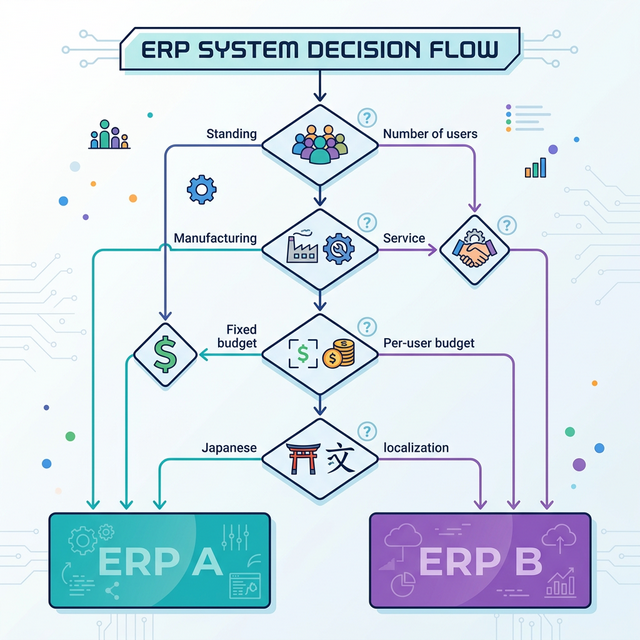
Conclusion — Which is a better fit for your company?
Companies that are suited to ERPNext
- ✅ Large number of users (We want to provide accounts to everyone, including part-timers and partner companies)
- ✅ Manufacturing (especially food processing and parts manufacturing, where Japanese-style cost accounting and traceability are necessary)
- ✅ I want to own the source as my company's asset (an AI-internalization launchpad) / fix running costs (flat-fee optional managed cloud plan)
- ✅ Want to avoid vendor lock-in (GPLv3 with full code open-source is reassuring)
- ✅ FAX order taking and EDI data import are the core of our operations.
Companies that Odoo is suitable for
- ✅ Mainly non-manufacturing sectors such as service and retail
- ✅ I want to take advantage of the rich module ecosystem
- ✅ We want to start small with a small group (up to 10 people) (user charges will have minimal impact)
- ✅ We want to complete website and e-commerce development within the ERP system. (Odoo's web builder is highly functional)
ERPNext.JP will support you from comparison and evaluation to implementation.
"We're unsure whether ERPNext or Odoo is the right fit for our company." ERPNext.JP (MyHaTch) can help with those kinds of problems.
- 📊 We will listen to your company's business requirements and support you in selecting the optimal ERP system.
- 🎯 Test it with real business data using a 14-day free trial.
- 💰 Full source handed over (own all assets); optional flat-fee managed cloud plan, unlimited users, no minimum contract period (contact us for pricing).
We at MyHaTch provide support from the implementation to the operation of ERPNext. We provide support tailored to the needs of small and medium-sized manufacturing companies in Japan.
- "ERPNext or Odoo, which one is right for our company?"
- "I'd like to try it out with a free trial."
- "I'd like to discuss how to proceed with the implementation."
👉 Try it out with our 14-day free trial. ERPNext.JP should be the first step in resolving any uncertainties you may have regarding your company's ERP selection.
Related articles
 8 min
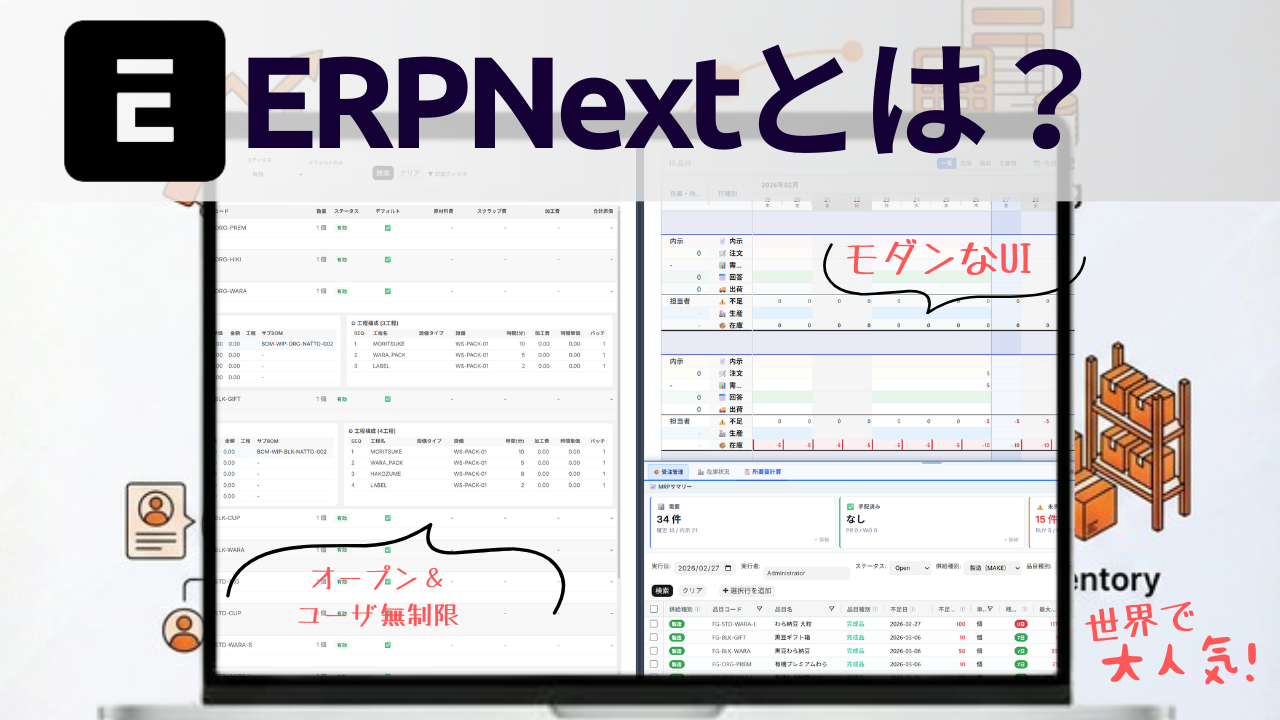
8 minUnderstand ERPNext in 3 minutes — the big picture of an open-source ERP
What ERPNext is and what business areas it covers, in three minutes. We cover module structure, how to read the official docs, and how to get started — pitched at first-time visitors.
 7 min
7 minERPNext.JP Implementation Cost Guide | Own the Source as Your Asset
We reveal ERPNext.JP's cost structure: the full source code is handed over so you own the system as your asset. Includes a comparison of four major ERP systems. Contact us for pricing.
 8 min
8 minWhy choose open-source ERP — three reasons: cost, freedom, and growth
What is an open-source ERP, and why should SMBs in particular choose one? Using ERPNext as the example, we cover cost advantages, freedom of customization, fit with AI, and even source-code purchase plans — all in plain English.