
Average Costs for ERP Implementation [2026 Edition]: Includes a Comparison Table of All 11 Products
The typical cost of implementing an ERP system in a manufacturing company with 30 employees is between 2 million and 15 million yen over 5 years (Total Cost of Ownership). This guide includes a comparison table of three types (cloud, on-premise, and open-source), a cost list for 11 major products, and a 15-item checklist to prevent budget overruns.
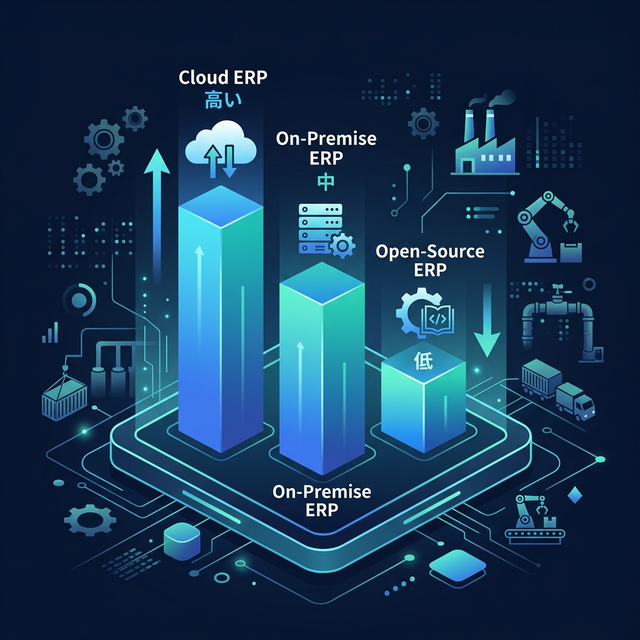
First conclusion: In the case of a manufacturing company with 30 employees
For busy business owners, get straight to the point. The total cost of ownership (TCO) over 5 years for a manufacturing company with 30 employees is as follows:
| Cloud SaaS | On-Premise | Open Source | |
|---|---|---|---|
| 5-Year Total Cost of Ownership (TCO) | 4 million to 35 million yen | 6.8 million to 29 million yen | 120,000 to 8 million yen |
| Typical Price Range | Approximately 8 million to 15 million yen | Approximately 12 million to 20 million yen | Approximately 2 million to 5 million yen |
💡 How to read this article: If you're short on time, please read in this order: Conclusion → Product Comparison (§2) → Hidden Costs (§5) → Checklist (§6)
1. How costs vary depending on the implementation method
The biggest factor influencing the cost of an ERP system is the choice of implementation model.
| Cloud SaaS | On-Premise | Open Source | |
|---|---|---|---|
| Representative products | SAP S/4HANA Cloud, Oracle | SAP B1, OBIC7, SMILE V | ERPNext, Odoo Community |
| Initial Investment | 500,000 to 5,000,000 yen | 5,000,000 to 50,000,000 yen | 0 to 3,000,000 yen |
| Monthly Fees | 50,000 to 1,000,000 yen | Maintenance 30,000 to 150,000 yen | Server Fee 2,000 to 100,000 yen |
| When the number of employees increases | Increases through user billing | Additional licenses | No change (unlimited) |
| Implementation Speed | 1-6 months | 6 months-2 years | 2-6 months |
| Vendor Dependency | High | Medium | Low (Code Public) |
| Suitable Companies | Companies that want to start immediately or have a small IT department | Companies with specialized operations or who can invest long-term | Companies that prioritize cost and seek flexibility |
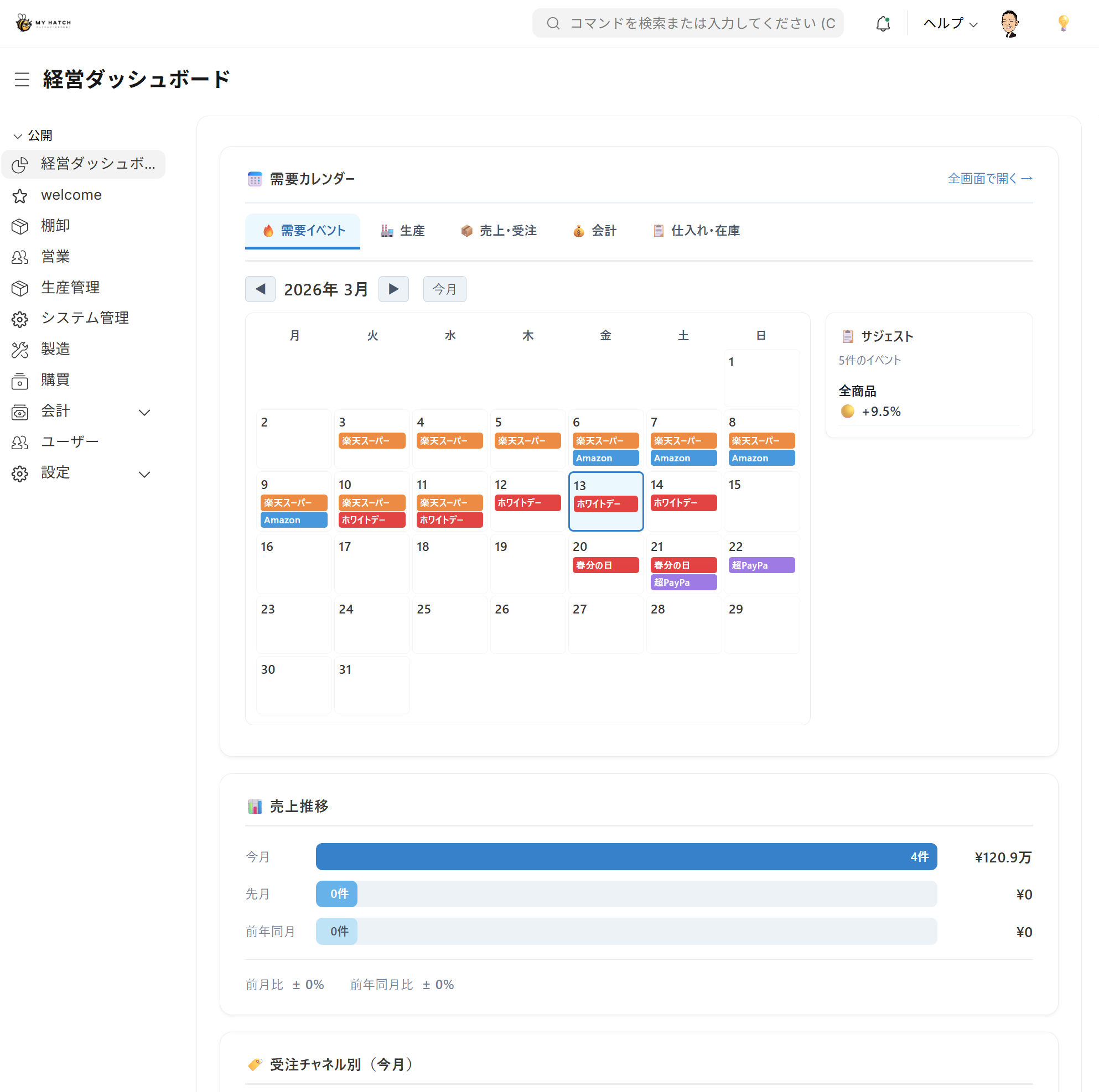
2. Cost Comparison of 11 Major Products (30 Manufacturing Employees)
| Product Name | Monthly Fee for 30 Users | Initial Setup Fee | User-Based Billing | Suitable for Manufacturing Industries |
|---|---|---|---|---|
| SAP S/4HANA Cloud | 500,000 - 1,500,000 yen | 10,000,000 - 100,000,000 yen | Available | ✅ |
| Oracle ERP Cloud | 300,000 - 1,000,000 yen | 5,000,000 - 50,000,000 yen | Available | ✅ |
| SAP Business One | 500,000 - 1,000,000 yen | 5,000,000 - 30,000,000 yen | Available | ✅ |
| OBIC7 | Inquiry Required | 10 million to 50 million yen | Inquiry Required | ✅ |
| Bugyo V ERP | Estimated 200,000-400,000 yen | Inquiry required | Per module | △ |
| SMILE V | Estimated 100,000-200,000 yen | Inquiry required | Available | △ |
| Odoo Enterprise | 150,000 - 240,000 yen | 2,000,000 - 10,000,000 yen | Available | ✅ |
| freee Integrated ERP | Confidential | Inquiry Required | Confidential | ❌ |
| kintone | 54,000 yen | Almost unnecessary | Yes | ❌ |
| ERPNext (OSS version) | Server fee only | 0 yen | None | ✅ |
| ERPNext.JP | Optional (maintenance subscription) | Full source handed over — contact us for pricing | None | ✅ |
Three common patterns
| Pattern | 5-Year TCO | Suitable Companies |
|---|---|---|
| A. Major ERP (SAP / Oracle) | Approximately 60 million to 100 million yen | Globally expanding, publicly listed company |
| B. Mid-sized ERP (Odoo / Bugyo / SMILE V) | Approximately 12 million to 26 million yen | Mid-sized companies requiring customization |
| C. Open Source ERP (ERPNext) | Approximately 120,000 to 8,000,000 yen | Cost-conscious, phased DX promotion |
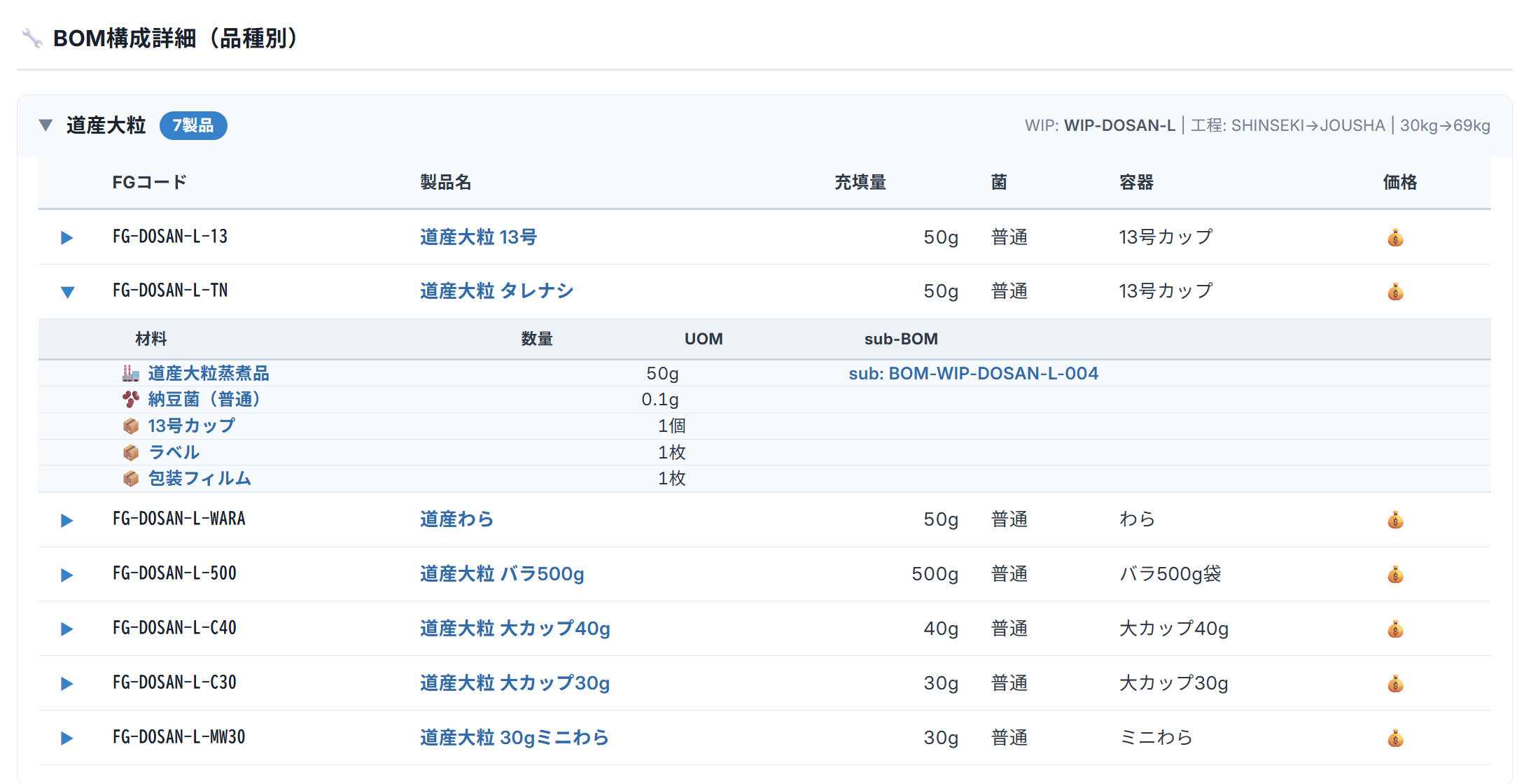
3. Make decisions based on "return on investment" rather than cost.
A cheap ERP is not necessarily a good ERP. What managers should be looking at is the return on investment.
| Improvement Items | Effects (for a group of 30 people) |
|---|---|
| Inventory Optimization | Reduce excess inventory by 15-30% → Annual savings of 1 million to 5 million yen |
| Lead Time Reduction | Eliminate manual work to reduce lead time by 30-50% → Annual savings of 1 million to 3 million yen |
| Reduce errors and rework | Over 80% reduction in transcription errors → Annual savings of 500,000 to 1,500,000 yen |
| Cost Visualization | Accurate cost tracking by product → Enables decision-making for improving profit margins |
Source: Small and Medium Enterprise Agency "White Paper on Small and Medium Enterprises", Nork Research "Survey on IT Investment Trends of Medium-Sized and Small Businesses"
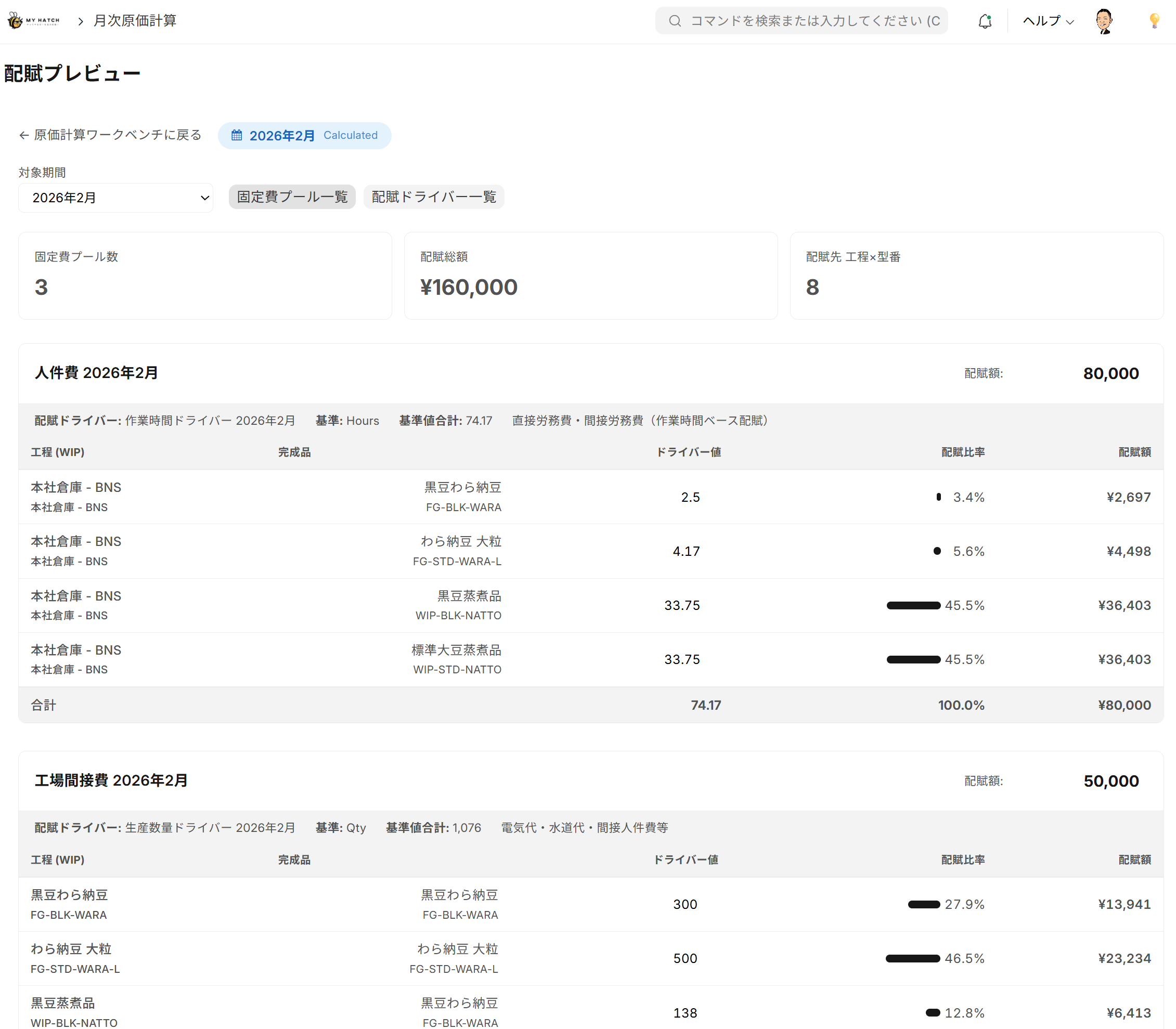
💡 The business improvement effects of ERP are almost the same regardless of the product. If the return is the same, the smaller the investment, the higher the ROI. If you can expect an annual return of 2.5 million to 9.5 million yen with an open-source ERP (5-year TCO of 2 million to 5 million yen), the investment will be recovered in 1 to 2 years.
4. Cost estimates by company size
| Company Size | Cloud 5-Year TCO | On-Premise 5-Year TCO | Open Source Software 5-Year TCO | Typical Deployment Cost |
|---|---|---|---|---|
| Up to 50 people | 2.3 million to 21 million yen | 4.2 million to 21 million yen | 120,000 to 8 million yen | 3 million to 8 million yen |
| 50-300 people | 8 million-58 million yen | 13 million-68 million yen | 1.6 million-14 million yen | 10 million-30 million yen |
| 300+ people | 35 million to 230 million yen | 36 million to several hundred million yen | 6 million to 38 million yen | 30 million yen and up |
5. The real culprit behind budget overruns: 5 hidden costs not included in estimates
64% of ERP implementations go over budget, on average by 25-40% more than the initial estimate (Panorama Consulting Group, 2024 ERP Report). The cause is "hidden costs" that are not included in vendor quotes.
| Hidden Costs | Typical Costs (for a company of 30 people) | Why are they overlooked? |
|---|---|---|
| Bloody Customization | Initially 2 million yen → Final 4.5 million yen | Blindly accepting the claim that "it can be handled with standard features" |
| Data Migration | 500,000 to 3,000,000 yen | Will be listed as "separate" in the estimate |
| Training and Education | 500,000 to 2,000,000 yen | More than double that if you include the decrease in work efficiency during training |
| External System Integration | 1 million to 5 million yen | Often excluded from the scope during the requirements definition phase |
| Project Duration | Difficult to Quantify | Main Causes: Personnel Shortage (38%), Scope Expansion (35%) |
⚠️ Hidden costs can add up to 50-100% of the quoted price. A 10 million yen estimate could result in a final payment of 15-20 million yen.
6. [Recommended to Save] Quotation Checklist (15 items)
Once you receive the quote, be sure to check the following: If there is even one "unclear" point, ask the vendor for clarification before signing the contract.
Pricing Structure
- Is the expected increase in costs when adding users clearly stated?
- Is BOM/MRP an optional extra (additional charge)?
- Are there any additional costs for a major version upgrade?
- Minimum contract period and penalties for early termination
Implementation and Customization 5. Breakdown of customization (not as a "set" but as man-days x unit price) 6. Unit cost of additional development after implementation 7. Rules for expense settlement when requirements change 8. Scope, responsibilities, and costs of data migration
Operation/Maintenance 9. Breakdown of maintenance costs (scope of troubleshooting and updates) 10. Nighttime and holiday support system for system failures 11. Backup frequency and recovery time target 12. Method and format for returning data upon cancellation.
Expenses that are often overlooked 13. Are education and training expenses included (for how many people)? 14. Are development costs for integration with external systems included? 15. Will project management fees (PM fees) be billed separately?
🔑 Pay attention to what's "not written" in the estimate. Not listed doesn't mean 0 yen; it means "undecided." The biggest cause of budget overruns is miscommunication, where "expenses that were assumed to be included are actually separate charges."
7. Four strategies to reduce costs
① Eliminate licensing costs with open-source ERP ERPNext has no license fees. No additional costs whether you have 30 or 100 users. With ERPNext.JP, you can own the full source code of a full-fledged ERP system as your asset (contact us for pricing). Expect annual savings of ¥1 million to ¥5 million.
② Utilize the "Digitalization and AI Implementation Subsidy" The 2026 subsidy (formerly the IT Introduction Subsidy) will cover 1/2 to 2/3, up to a maximum of 4.5 million yen of ERP implementation costs. Applications will be accepted from March 30, 2026. The first application deadline is May 12. (Source: SME Support, Japan, 2026 Application Guidelines)
③ Eliminate the "failure cost" in the PoC Conducting a Proof of Concept (PoC) with real data before implementation can prevent the most costly failure: "it didn't work after implementation." ERPNext.JP offers a fixed-scope, fixed-price PoC (contact us for pricing).
④ In-house development using open source and AI-powered coding Companies with in-house engineers have the option of developing their own ERP system in-house using AI vibecoding (conversational AI development) based on open-source ERP. Generative AIs such as ChatGPT, Claude, and GitHub Copilot have deep knowledge of open-source code, which can dramatically accelerate the development of customized ERP systems.
However, setting up an environment and adding Japanese language support for ERPNext from scratch is not practical. Therefore, ERPNext.JP's "Self-Operation Plan" serves as the "launching pad."
Source Package (contact us for pricing) — We provide the complete source code for ERPNext.JP. A fully configured version, including environment setup, Japanese specifications (consumption tax, reporting, and invoice support), and mobile compatibility, can be installed on your company's server. Commercial use for your own business is included. For SIers / IT firms deploying to their customers, customer-rollout support is available on request (scoped individually).
After purchasing the source package, we can also support operations initially, and you can transition to in-house operation once your internal development system is in place.
💡 2026 Trend: In-house ERP Development through Open Source x AI Vibe Coding
An increasing number of companies are dissatisfied with vendor lock-in (a situation where companies become dependent on a specific vendor, making it difficult to switch to another system) with major ERP systems. With commercial ERP systems whose source code is not publicly available, companies have no choice but to continue paying high development costs to the vendor every time they want to customize the system.
On the other hand, with open-source ERP, companies can completely control the source code and customize it directly with AI-powered coding. A growing number of companies are freeing themselves from vendor lock-in and reclaiming control of ERP development.
Related Articles
Q. What is the average cost of implementing an ERP system? For a small to medium-sized manufacturing company with around 30 employees, the typical price range is approximately 8 million to 15 million yen for a 5-year TCO of cloud SaaS and approximately 2 million to 5 million yen for open-source ERP.
Q. What are hidden costs? These are expenses that are not included in the estimate but are actually incurred. Five typical examples are additional customization costs, data migration costs, training costs, system integration costs, and opportunity costs due to project delays. These can sometimes amount to 50-100% of the estimated cost.
Q. What subsidies are available for ERP implementation? The "Digitalization and AI Introduction Subsidy" for fiscal year 2026 will provide up to 4.5 million yen, with a subsidy rate of 1/2 to 2/3. Applications will be accepted starting March 30, 2026.
Introducing ERPNext.JP
Up to this point, I have presented an unbiased overview of the average costs associated with ERP implementation. Finally, I would like to introduce the services of ERPNext.JP (operated by MyHaTch), the company that wrote this article.
ERPNext.JP — Own your manufacturing ERP as your asset, with unlimited users
- 💰 No per-user licensing — The cost remains the same whether you have 30 or 100 people.
- 🎯 Fixed-price PoC (fixed scope) — Verify with your company's real data before committing
- 🏭 Full source handed over (for your own use) — Own the full source as your company's asset, a launchpad for building your own AI-powered ERP (hands-on support and maintenance subscription available)
- 🤖 AI × Open Source — Dramatically reduce implementation time with AI-assisted development.
- 📋 Transparent pricing system — A quote is provided before any work begins (contact us for pricing).
- 🔓 No vendor lock-in — 100% open source code
- "We want to know our company's cost estimates."
- "We want to try it out with a special-price proof-of-concept first."
- "I want a second opinion on a quote from another company."
👉 Start with a free consultation to explore the possibility of implementing ERP in your company.
Related articles
 7 min
7 minERPNext.JP Implementation Cost Guide | Own the Source as Your Asset
We reveal ERPNext.JP's cost structure: the full source code is handed over so you own the system as your asset. Includes a comparison of four major ERP systems. Contact us for pricing.
![ERPNext vs Odoo Comparison [2026]: Differences, Cost, and Manufacturing Fit of Free ERP](/images/documents/solution/erp-comparison/erpnext-vs-odoo-hero.png) 12 min
12 minERPNext vs Odoo Comparison [2026]: Differences, Cost, and Manufacturing Fit of Free ERP
Compare ERPNext and Odoo on cost, licensing, Japanese localization, manufacturing features, and customizability. We break down Odoo Community/Enterprise vs ERPNext.JP for SMB ERP selection.
 8 min
8 minBreaking the Limits of kintone — A Complete Guide to Migrating to ERPNext
Feeling the limitations of kintone for business management? This guide clearly explains how to migrate to ERPNext, which solves the problems of multiple apps, inventory management issues, and duplicate accounting entries, all at once, and includes a cost comparison.